When anxiety keeps your mind racing at night, when overthinking turns simple decisions into exhausting mental debates, or when the same unwanted habits keep showing up despite your best efforts, it’s natural to start looking for answers.
As you explore your options, you’ll likely come across two widely recommended approaches: hypnotherapy and Cognitive Behavioral Therapy (CBT). Both have helped countless people navigate anxiety, stress, depression, fears, and behavior change.
Yet many people find themselves wondering which path is more aligned with what they’re experiencing.
If you are also one among them and are looking to understand about Hypnosis vs CBT therapy, what each one offers, how it helps, and which one is right, then the blog below is all you need.
TL;DR
- CBT focuses on changing conscious thought patterns, while hypnotherapy works with subconscious beliefs and behaviors.
- Cognitive Behavioural Therapy vs Hypnotherapy is not about which is better, but which approach aligns best with your goals, challenges, and preferences.
- CBT therapy benefits are centered on practical coping skills, while hypnosis therapy benefits focus on creating bigger behavioral and emotional change.
What is Hypnosis and How Does it Help?
Hypnosis is a gentle therapeutic technique that helps you enter a deeply relaxed and focused state of mind. Contrary to popular belief, hypnosis is not about losing control or being asleep. You’re fully aware of what’s happening around you.
In this relaxed state, a certified hypnotherapist helps you access the subconscious mind, the part of your mind where many beliefs, habits, emotional responses, and thought patterns are stored.
Using techniques such as guided visualization, positive suggestions, reframing, and mental rehearsal, hypnotherapy can help you replace limiting beliefs with more empowering ones and develop healthier ways of thinking and responding to life’s challenges.
Research suggests that hypnotherapy may help:
- Reduce anxiety and stress by helping the mind relax and feel more in control. This is one reason many people compare Anxiety treatment hypnosis vs CBT when exploring therapy options.
- Calm overthinking by helping break repetitive thought loops and creating a greater sense of mental clarity.
- Build confidence and self-esteem by replacing limiting beliefs with healthier and more supportive ways of thinking.
- Support positive behavior change by making hypnosis vs. talk therapy an important consideration for people working on habits, fears, or personal goals.
- Improve emotional well-being by helping people respond to challenges with greater calm, resilience, and self-awareness.
- Encourage mindfulness and presence, which is why many people explore Hypnosis for Mindfulness as part of their wellness journey.
What is Cognitive Behavioral Therapy and How Does It Help?
Cognitive Behavioral Therapy (CBT) is a type of talk therapy that helps you understand how your thoughts affect your emotions and actions. The goal is to identify thought patterns that may be causing stress, anxiety, or other emotional challenges and replace them with healthier, more realistic ways of thinking.
During a CBT session, a therapist helps you recognize recurring thoughts, understand how they influence your feelings and behaviors, and learn practical techniques to respond differently. Over time, these new thought patterns can lead to healthier emotional responses and better decision-making.
Unlike hypnotherapy, which works with the subconscious mind, the core of the brain, cognitive behavioral therapy treatment focuses on conscious thoughts and behaviors that you can identify and change.
Some of the most common CBT therapy benefits include:
- Helping you recognize negative thinking patterns that may be contributing to anxiety, stress, or depression.
- Teaching you how to challenge unhelpful thoughts instead of automatically believing them.
- Developing healthier ways to respond to stressful situations and emotional triggers.
- Changing behaviors that may be keeping you stuck in cycles of fear, avoidance, or self-doubt.
- Building practical coping skills that you can use in everyday life.
Because CBT focuses on present-day thoughts and behaviors, it is commonly used for anxiety, depression, stress, phobias, OCD, and other mental health concerns. This is one reason many people compare hypnosis vs. CBT therapy when looking for the approach that best fits their needs.
Hypnotherapy vs Cognitive Behavioral Therapy: Key Differences
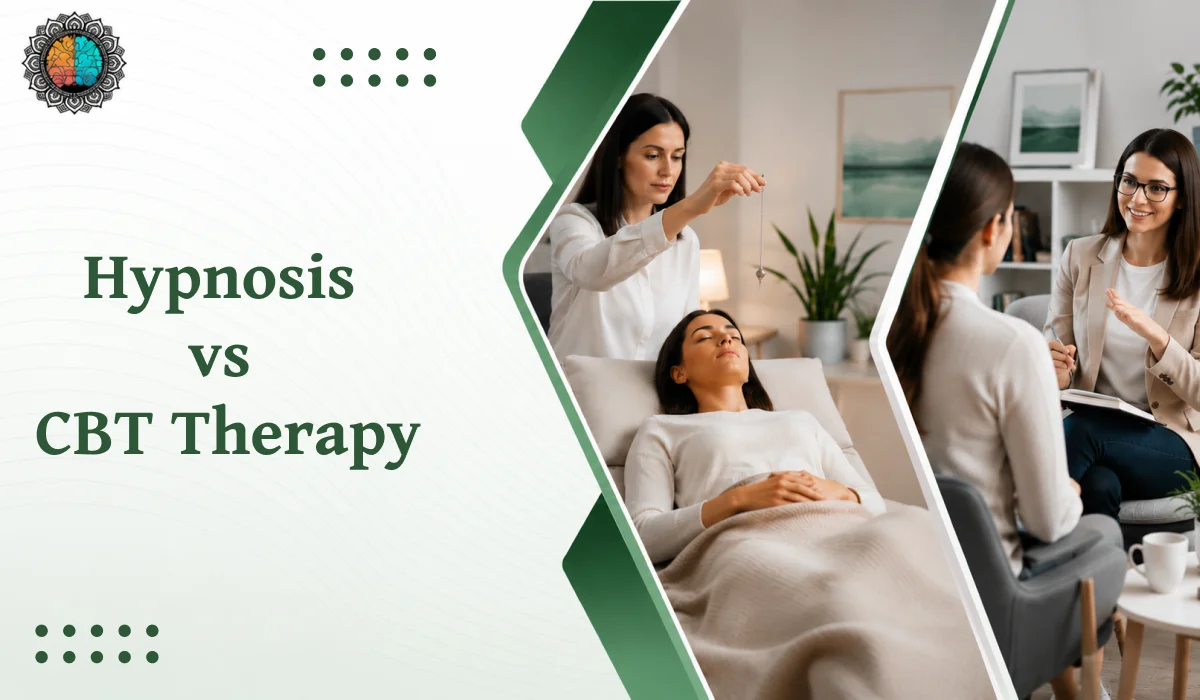
When comparing hypnosis vs. CBT therapy, it’s important to understand that both approaches are designed to help people improve their mental and emotional well-being, but they work in very different ways.
Neither approach is inherently better than the other. The right choice depends on your goals, preferences, and the challenges you’re facing. In some cases, a combination of both can be beneficial.
Factor | Hypnotherapy | Cognitive Behavioral Therapy (CBT) |
Primary Focus | Works with subconscious beliefs, habits, emotions, and behavioral patterns. | Works with conscious thoughts, beliefs, and behaviors. |
How It Creates Change | Uses relaxation, visualization, positive suggestions, and reframing techniques. | Uses discussion, thought analysis, behavioral exercises, and coping strategies. |
Session Experience | Typically involves guided relaxation and focused attention. | Typically involves conversation, reflection, and structured exercises. |
Best For | Anxiety, stress, fears, confidence issues, habits, and Hypnotherapy for Overthinking. | Anxiety, depression, phobias, OCD, stress management, and negative thinking patterns. |
Approach to Anxiety | Addresses emotional triggers and subconscious responses. Often considered when exploring Anxiety treatment, hypnosis vs CBT. | Focuses on identifying and challenging anxious thought patterns. |
Behavior Change | Helps reshape subconscious habits and automatic reactions. | Helps change behaviors by altering conscious thought processes. |
Mindfulness & Self-Awareness | Frequently incorporates visualization and relaxation techniques, making Hypnosis for Mindfulness a natural fit. | Teaches awareness of thought patterns and emotional responses. |
Homework Between Sessions | Usually minimal and may include recordings, journaling, or self-hypnosis exercises. | Often includes worksheets, thought records, and practical exercises. |
Treatment Style | More experiential and inwardly focused. | More analytical and skills-based. |
Goal | Create change by addressing deeper subconscious patterns. | Create change by developing healthier thinking and behavioral habits. |
How to Choose Between CBT and Hypnotherapy?
When it comes to choosing between CBT and hypnotherapy for treatment, there isn’t a single right answer. The best approach depends on what you’re struggling with, how you prefer to process challenges, and what type of support feels most comfortable to you.
You may prefer CBT if you want a structured approach that helps you understand and change your thought patterns through discussion, practical exercises, and coping strategies. Many people choose cognitive behavioral therapy treatment when they want clear tools they can apply in their everyday lives.
On the other hand, hypnotherapy may be a better fit if you feel like you already understand your challenges but continue to experience the same emotional reactions, habits, or behaviors. Because hypnotherapy works with the subconscious mind, it can help address deeper patterns that may be difficult to change through logic alone.
Many practitioners use cognitive-behavioral hypnotherapy, combining the practical tools of CBT with the deeper, subconscious-focused techniques of hypnotherapy.
Hypnosis vs CBT Therapy: Final Thoughts
In the end, the most important thing is choosing an approach that feels right for you and supports the changes you want to make. Sometimes that means CBT, sometimes hypnotherapy, and sometimes a combination of both.
If you’re exploring the benefits of hypnotherapy and want to learn whether it aligns with your goals, speaking with a qualified professional can be a helpful next step. Jigeesha Pandya, a Certified Hypnotherapist in the Bay Area at ManahSculpt, helps individuals navigate challenges such as anxiety, overthinking, stress, and self-limiting beliefs through a personalized approach to hypnotherapy.
Whatever path you choose, investing in your mental and emotional well-being is always a step in the right direction.

Frequently Asked Questions(FAQs)
Can Hypnosis and CBT be used together?
Yes. Many practitioners combine both approaches through cognitive-behavioral hypnotherapy, using CBT techniques to address conscious thought patterns while hypnotherapy works with subconscious beliefs and behaviors.
Is Hypnosis safe for mental health treatment?
Yes, when conducted by a qualified professional, hypnotherapy is generally considered safe. It is commonly used as part of a broader mental health therapy comparison for anxiety, stress, habits, and emotional well-being.
What conditions does CBT treat best?
Cognitive behavioral therapy treatment is commonly used for anxiety disorders, depression, phobias, OCD, PTSD, stress management, and other challenges related to negative thought patterns and behaviors.
Anxiety treatment hypnosis vs CBT: Which works better?
Both approaches can be effective. CBT helps people identify and change anxious thought patterns, while hypnotherapy focuses on the subconscious beliefs and emotional triggers that may contribute to anxiety.
What are the best depression therapy options?
Common depression therapy options include CBT, psychotherapy, hypnotherapy, lifestyle changes, support groups, and medication when recommended by a healthcare provider.
What is the mental health therapy comparison between CBT and hypnotherapy?
In a mental health therapy comparison, CBT focuses on changing conscious thoughts and behaviors, while hypnotherapy works with subconscious patterns, beliefs, and emotional responses.

Jigeesha Pandya is a Certified Hypnotherapist and Reiki Practitioner. With a background in climate change research, she shifted her focus to hypnotherapy, studying at the renowned Hypnosis and Motivation Institute in Los Angeles. Jigeesha is passionate about helping individuals harness the power of the subconscious mind for healing and growth.
- All Posts
- Hypnosis
- Motivation
- Relationship
- Test 1
- test 2