You calm your mind for better sleep by reducing overthinking, slowing down before bedtime, and creating simple, consistent sleep solution habits that signal relaxation. As shared by Jigeesha Pandya, when you build a calm mind for better sleep through basic relaxation techniques for sleep and steady routines, your body naturally falls asleep without force.
About 1 in 3 adults don’t get enough sleep regularly. Most people try to fix sleep at night. That’s where the struggle begins.
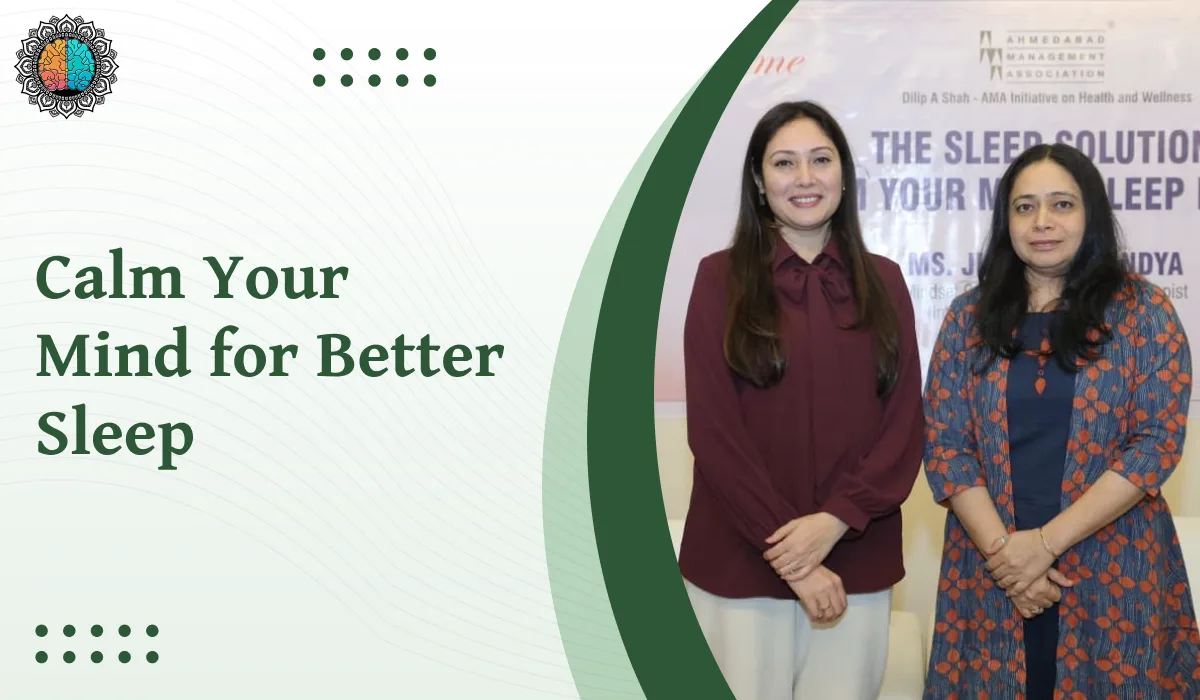
In the session “The Sleep Solution: Calm Your Mind, Sleep Better,” Jigeesha Pandya reframed the entire conversation. She didn’t position sleep as something to chase. She showed how the mind quietly interferes with it and how to remove that interference.
This session brought together practical insight, behavioral understanding, and real, usable sleep solution strategies that people could apply immediately.
Here’s What You Should Stop Doing for Better Sleep, Explained by Jigeesha Pandya
Stop Treating Sleep Like Something You Need to Achieve
People often approach sleep with pressure:
- I need to fall asleep now.
- Why is this not working?
- I have to wake up early.
That pressure fuels mental activity.
Jigeesha addressed this directly. She explained that sleep doesn’t respond to force; it responds to internal state. When the mind stays active, the body follows. When the mind slows down, the body shifts into rest.
This simple shift forms the base of all effective sleep improvement techniques.
Do Not Overwork Your Mind.
Jigeesha broke down the mind-body connection and sleep in a clear, practical way.
Your thoughts don’t stay in your mind; they influence your body.
- Mental replay keeps the brain active
- Worry signals alertness
- Over-analysis delays relaxation
The body responds instantly to these cues.
That’s why people feel exhausted but still can’t sleep. The issue doesn’t come from a lack of sleep ability. It comes from an overactive mental state.
When you understand this, you stop asking, “Why can’t I sleep?”
You start asking, “What state is my mind in right now?”
Do Not Drift Much from Learned Patterns
A key insight from the session:
Sleep challenges follow patterns, not randomness.
Over time, the mind builds associations:
- The bed becomes a thinking space
- Night becomes planning time
- Silence triggers overthinking
These patterns repeat every night.
Jigeesha emphasized that these are learned responses and that anything learned can be changed. This is where sleep mindset techniques and deeper approaches like Hypnotherapy for Overthinking begin to make a difference.
The Three Shifts That Change Sleep
Jigeesha structured the session around three powerful shifts that help you improve sleep naturally.
Train the Mind to Feel Safe at Night
The mind won’t allow sleep if it senses tension.
This tension doesn’t always feel obvious. It shows up as subtle mental activity, unfinished thoughts, or constant stimulation.
Creating a calm mind for better sleep starts with:
- slowing down your evenings
- reducing consumption
- building predictable routines
Over time, the mind begins to associate nighttime with calm instead of activity.
Break the Overthinking Cycle
Overthinking doesn’t stop with control; it stops with awareness.
Jigeesha introduced practical techniques to stop overthinking at night and sleep better, such as:
- observing thoughts without reacting
- avoiding late-night problem-solving
- giving your mind closure before bed
For those dealing with persistent mental loops, working through Hypnosis for Anxiety or Hypnotherapy for Overthinking helps shift these patterns at a deeper level.
Help the Body Move Into Rest Mode
The body needs clear signals to relax.
Jigeesha focused on building healthy sleep habits through:
- consistent sleep timing
- gentle wind-down routines
- Reducing stimulation before bed
These simple actions strengthen long-term sleep wellness strategies and support natural rest.
Practical Tools That Build Real Change
The session focused on tools people could actually use.
Participants explored:
- Structured wind-down practices
- Simple relaxation techniques for sleep
- Thought management before bedtime
- Awareness of internal state
These tools don’t force sleep. They create the conditions for it.
That’s what makes them effective and sustainable deep sleep techniques.
Where Hypnosis Becomes Valuable
Jigeesha introduced hypnosis as a way to work directly with the mind’s patterns.
Instead of trying to control thoughts, hypnosis reduces their intensity and frequency.
Approaches like:
- (Guided hypnosis for relaxation)
- (Deep sleep hypnosis)
- (Mind hypnosis techniques)
help the mind shift into a calmer state without effort.
For those looking for structured support, exploring Hypnosis for Sleep in the Bay Area offers a guided way forward. Many clients who struggle with persistent patterns often find that this becomes the missing piece in their sleep solution journey, something you’ll notice when you meet Jigeesha Pandya, the best Hypnotherapist in the Bay Area for sleep, and understand her approach.
The Experience That Changed Perspective
The session concluded with a guided relaxation.
Participants didn’t just understand calm, they experienced it.
They noticed:
- Their thoughts are slowing down
- their body relaxing naturally
- less urgency to “fix” sleep
That moment mattered.
Because once someone experiences that state, they stop chasing sleep and start allowing it.
Final Thought
Sleep doesn’t need effort. It needs the right conditions.
When you calm the mind, you remove the interference. And when the interference goes, sleep returns, naturally, consistently, and deeply.
That’s the shift this session delivered.

Frequently Asked Questions
Why is it important to calm the mind before sleep?
A calm mind reduces mental activity and helps the body shift into a relaxed state, making sleep easier.
How does overthinking affect sleep?
Overthinking keeps the brain active, delays relaxation, and prevents the body from entering rest mode.
What are simple ways to improve sleep naturally?
Consistent routines, reducing stimulation, and using relaxation techniques for sleep help improve sleep naturally.
Can sleep problems be changed through mindset?
Yes. Sleep patterns form through repetition, and sleep mindset techniques can help rewire them.
What is the mind–body connection in sleep?
Your thoughts influence your body’s state. A calm mind supports relaxation and better sleep.
Why shouldn’t we force sleep?
Because forcing creates pressure, and pressure keeps the mind alert instead of relaxed.

Jigeesha Pandya is a Certified Hypnotherapist and Reiki Practitioner. With a background in climate change research, she shifted her focus to hypnotherapy, studying at the renowned Hypnosis and Motivation Institute in Los Angeles. Jigeesha is passionate about helping individuals harness the power of the subconscious mind for healing and growth.

- All Posts
- Hypnosis
- Motivation
- Relationship
- Test 1
- test 2