Most of us reach a point where we start questioning our own patterns.
Traditional therapy can definitely help us talk through these questions and give a clearer understanding of what’s happening in our present life. But sometimes, even after talking, journaling, and reflecting, there’s still a feeling that something deeper is going on.
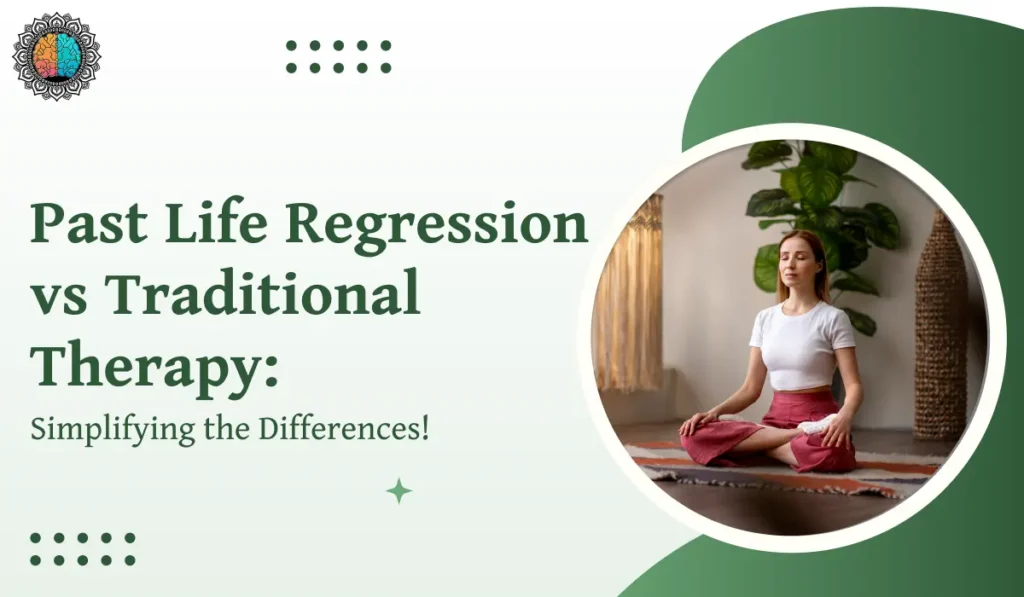
That’s when some people start exploring Past Life Regression to understand themselves on a deeper level. When we look at Past Life Regression vs Traditional Therapy, it’s not about which one is better. It’s about recognizing that different people need different approaches to healing.
This blog is for anyone who’s ever felt stuck, curious, or just open to understanding themselves in a new way, real, honest, and judgment-free. Let’s walk through both paths and see how each one helps in its own way.
Among U.S. adults with AMI (Any Mental Illness), just over 50.6 % received mental health treatment in the past year.
Past Life Regression is a guided process where you relax deeply and explore memories or images that feel connected to another lifetime. A trained therapist uses gentle hypnosis to help you focus inward, quiet your mind, and access your subconscious more clearly. Many people seeking Past Life Regression in San Francisco Bay Area look for this deep, introspective approach when traditional talk therapy no longer feels enough.
— From a summary of The Past Life Perspective
People try past-life regression when certain fears, reactions, or patterns don’t match their current life experiences. In this relaxed state, you might see scenes, feel emotions, or gain insights that help you understand where those patterns come from.
Some people view it as a spiritual experience. Others see it as a way for the subconscious mind to express old emotions and unresolved stories. Either way, the goal stays the same: to understand yourself better and release what no longer serves you.
Traditional therapy is a structured, talk-based approach where you work with a trained mental health professional to understand your thoughts, emotions, and behaviors. You talk about your life, your patterns, and the challenges you’re facing right now, and your therapist helps you make sense of them.
Different therapists use different methods, like cognitive-behavioral techniques, mindfulness, psychoanalysis, or solution-focused work, but the goal stays the same: to help you feel better, think more clearly, and navigate your life with more awareness.
It focuses on your current life, your childhood, your relationships, your habits, and the experiences that shaped you. Past Life Regression, on the other hand, instead of staying within your present story, looks at deeper, symbolic layers that might influence your patterns today.
When we look at Past Life Regression vs Traditional Therapy, we’re really looking at two very different ways of understanding why we feel, think, or react the way we do. Traditional therapy stays grounded in your present life, while Past Life Regression Therapy goes deeper into your previous lifetime. Let’s keep reading to know more about the Traditional Therapy vs. Past Life Regression.
What We’re Looking At | Past Life Regression | Traditional Therapy |
What it focuses on | It explores memories or feelings that seem bigger than this lifetime. | It looks at what’s happening in your life right now and what shaped you growing up. |
How the session feels | You lie back, relax deeply, and go into a guided hypnotic state. | You sit and talk openly with your therapist in a normal, awake state. |
What you explore | Intuitive images, emotional patterns, or past-life stories that show up in the subconscious. | Thoughts, emotions, habits, and life experiences you can remember clearly. |
What is the goal? | To release old emotional weight, understand deeper patterns, and connect spiritually. | To understand your emotions, learn coping tools, and create healthier behaviors. |
How insights show up | Through symbolic or vivid experiences that may feel new or meaningful. | Through conversations, reflections, and practical strategies. |
Who usually chooses it | Someone who feels stuck, curious, or drawn to spiritual or subconscious exploration. | Someone looking for clarity, support, and tools to handle everyday challenges. |
How long does it last? | Often done in a few focused sessions. | Can be short-term or long-term, depending on your needs. |
Science behind it | More based on personal experience and spiritual understanding. | Backed by research and widely used in mental health care. |
When you reach this point in your healing journey, the real question isn’t Which method is better? But what feels right for me right now? Some days you may need the steady clarity that traditional therapy brings. Other days, you may feel called to look a little deeper to explore the emotional layers your conscious mind doesn’t always reach.
That’s where Past Life Regression can offer something different. Not dramatic, not mystical, just another way of understanding why certain feelings or patterns feel so old and familiar.
If you’re curious about this kind of deeper work, you can connect with me, Jigeesha Pandya, a certified hypnotist near San Francisco Bay Area, and I can help you explore these layers. It’s never about forcing a belief; it’s about giving your mind one more doorway to healing.
In the end, the best path is the one that helps you feel more connected to yourself.

Yes. Many people explore past life regression out of curiosity rather than belief. You don’t need to be convinced; you just need to be open. The process focuses on the subconscious mind, not on proving whether past lives are real.
No. During past-life regression hypnosis, you remain aware, relaxed, and fully in control. You can stop or redirect the session at any time. It’s a gentle form of traditional hypnotherapy, not mind control.
That’s completely normal. Many people experience symbolic or emotional scenes rather than literal memories. The value lies in the clarity and emotional release; this is part of mind healing through regression, not historical accuracy.
Yes, some people use past life regression for trauma and emotional release, especially when certain feelings feel unexplained. But it works best when used alongside traditional therapy for a more complete healing path.
Results vary. Some people feel lighter or gain insight after one regression session. Traditional therapy, on the other hand, usually works gradually over time. Both approaches support healing, just in different ways.
Many people describe Past Life Regression Therapy as deeply emotional and meaningful. Some feel a sudden release of long-held fears, while others gain clarity about patterns they couldn’t explain before. Most people walk away feeling lighter, more aware, and more connected to themselves.

Jigeesha Pandya is a Certified Hypnotherapist and Reiki Practitioner. With a background in climate change research, she shifted her focus to hypnotherapy, studying at the renowned Hypnosis and Motivation Institute in Los Angeles. Jigeesha is passionate about helping individuals harness the power of the subconscious mind for healing and growth.